Reflections on Understanding Life · Two
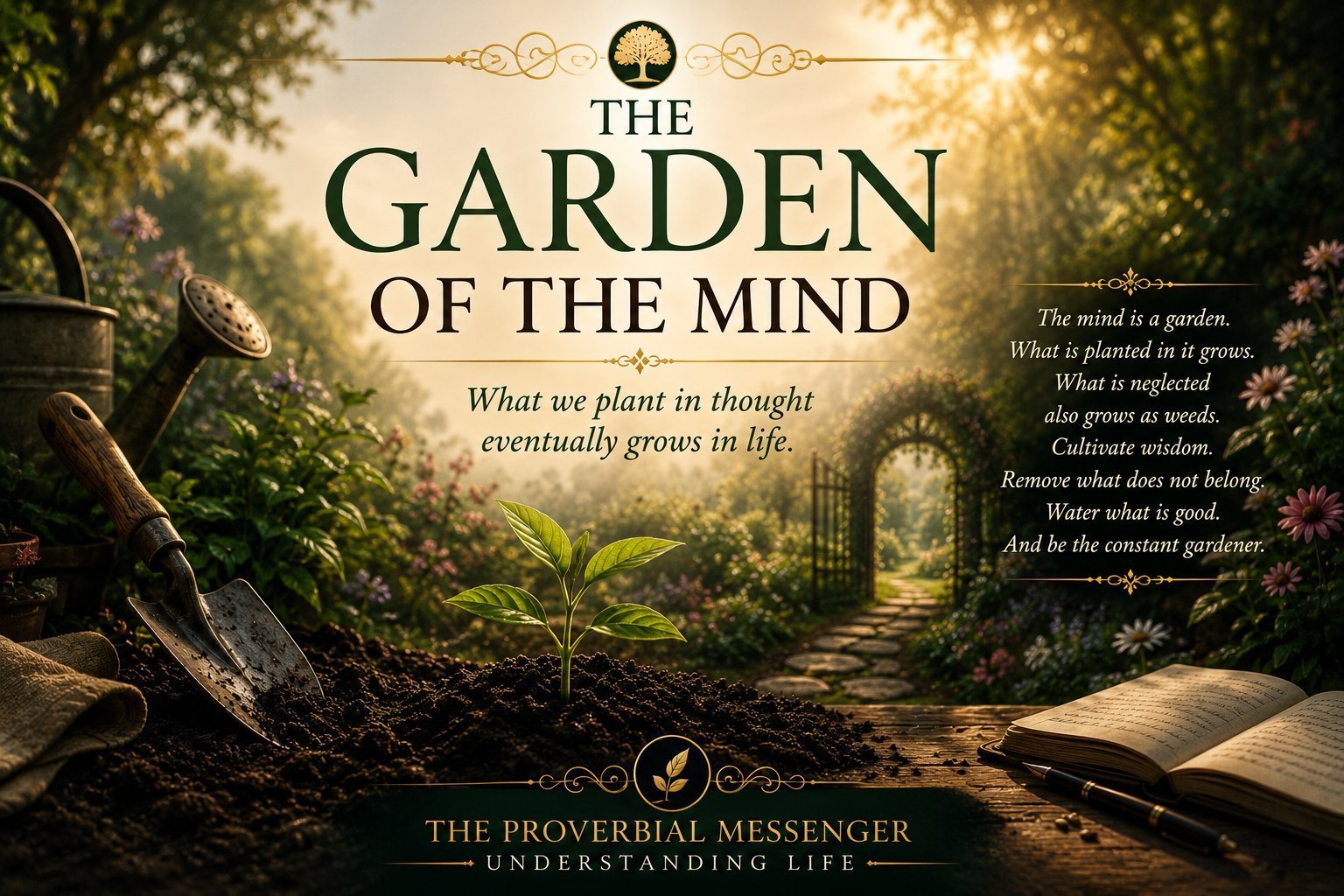
The Garden of the Mind
What we plant in thought eventually grows in life.
A garden left alone does not remain empty. It grows.
That is the first truth every gardener learns. Neglect is not neutrality. If the soil is not cultivated, something will still take root. If the gardener does not decide what belongs there, the conditions will decide for him. Seeds will arrive by wind, by birds, by accident, by carelessness. Some will be harmless. Some will be beautiful. Some will look harmless while quietly choking everything that was planted with care.
The mind works the same way.
A person may imagine that thoughts are private, weightless things — passing impressions, passing irritations, passing fears, passing judgments. But thoughts do not merely pass. Some are planted. Some are watered. Some are given room. Some are protected, defended, rehearsed, and returned to until they have taken root deeply enough to produce something visible.
This is why the mind must be treated as a garden. A garden requires attention. It requires discernment. It requires the gardener to know the difference between what should be planted, what should be nurtured, and what must be pulled out before it spreads.
The Seeds We Entertain
Every thought is not worthy of a place in the soil. Some thoughts arrive looking reasonable. Some arrive dressed as concern, wisdom, caution, or even righteousness. But not every thought that appears useful is right. A weed does not always announce itself as a weed. Some weeds grow quickly. Some look attractive. Some even have limited benefits. Yet if they are allowed to remain in the wrong place, they can choke the life out of what was intentionally planted.
So it is with the thoughts of the mind. A bitter thought may first appear as discernment. A fearful thought may first appear as caution. A proud thought may first appear as confidence. A suspicious thought may first appear as wisdom. A careless thought may first appear as freedom.
But whatever is planted will grow after its kind. A person cannot plant bitterness and expect peace to bloom. A person cannot plant envy and expect gratitude to appear. A person cannot plant contempt and expect love to grow from it. In Understanding Life, this principle is stated plainly: one cannot plant a bad thought and expect it to turn into good actions; grown thoughts eventually manifest through words and actions.
The better question is not whether a thought feels justified, but: what will this thought produce if I continue to water it?
The Constant Gardener
The beauty of a garden is not maintained by the absence of weeds. Weeds come. They come because soil is alive. They come because wind moves. They come because the world is not sealed. The difference between a neglected garden and a beautiful one is not that one receives weeds and the other does not. The difference is that one has a gardener who is always watching, always tending, always removing what does not belong.
The mind is no different. A disciplined mind is not a mind that never receives troubling, negative, or destructive thoughts. It is a mind with a gardener present. It is a mind that does not allow every seed to become a root, every root to become a stem, and every stem to become a vine that wraps itself around the whole inner life.
The constant gardener does not panic when a weed appears. He recognises it. He removes it. He returns to the soil. He keeps planting. This is the quiet labour of wisdom.
Looking Over the Fence
It is easy to look at another person's garden and judge the fruit. It is easy to see what someone else has built, grown, endured, or become, and imagine that their garden simply favoured them. We may see the harvest without seeing the tears, the sacrifice, the discipline, the years of hidden planting, or the seasons where nothing appeared to be growing at all.
This is one of the great mistakes of life: to spend more time looking over the fence than tending our own ground. Some people wait to become peaceful before they plant peace. They wait to become disciplined before they plant discipline. They wait to feel joyful before they plant gratitude. They wait for life to become easier before they begin tending the mind.
But the gardener begins before the garden is beautiful. That is how it becomes beautiful.
The Mind Has Seasons
The garden of the mind also has seasons. In spring, thoughts are tender. The earliest seeds matter. What is planted at the beginning of a season may determine the shape of the harvest later.
In summer, heat tests what has been growing. A thought that had no root will wither. A thought that was deeply planted will reveal its strength. In autumn, the garden produces. What has been cultivated inwardly becomes visible outwardly in speech, conduct, patience, judgment, kindness, restraint, or the lack of them.
In winter, the garden may appear quiet. But quiet is not emptiness. Beneath the surface, roots are forming. The hidden work is deciding what will rise when spring returns. This is why the inner life cannot be neglected in any season. Even when nothing seems to be happening, something is being prepared.
What the Garden Reveals
A garden eventually tells the truth. For a time, the soil may hide what has been planted. But not forever. Thoughts grow into words. Words grow into habits. Habits grow into character. Character grows into the visible evidence of what has been tended within.
The garden reveals the gardener. A harsh life may reveal harsh cultivation. A patient life may reveal patient planting. A bitter life may reveal bitter roots. A wise life may reveal seeds that were tested, chosen, and nurtured over time.
This is not to say that every sorrow in a person's life is self-planted. Some storms come from outside the garden. Some damage is done by others. Some seasons arrive appointed, not chosen. But even then, the mind remains a garden. The question becomes not only what happened to the soil, but what the gardener will do with it now.
The Work of Understanding
To understand life, we must understand what is growing within us. We must ask what thoughts we have allowed to live there. We must ask what ideas we have mistaken for harmless. We must ask what we keep watering by returning to it again and again.
Wisdom is not merely knowing what is right. Wisdom is cultivating what is right until it bears fruit.
The mind is a garden. The thoughts are seeds. The habits are growth. The actions are fruit. The life is the harvest.
And every harvest begins somewhere. So let the gardener return to the soil. Let him examine what has grown. Let him pull what must be pulled, plant what must be planted, and water what is worthy of life.
For a garden does not become beautiful by accident. Neither does a mind.
This reflection grows out of the same soil as The Proverbial Messenger: Understanding Life — a book about tending the inner life with wisdom, honesty, and care.